Absence Management Training for Managers
Give your managers the confidence to handle sickness absence fairly, legally and consistently, balancing real compassion with clear expectations.


Today was very informative and thought provoking especially for issues that we would normally be scared of tackling. Thank you for today, I was looking forward to the training and it surpassed my expectations due to the subjects covered and making everyone review our processes and consider how to make positive changes.

Are frequent absences disrupting your business, increasing workloads and frustrating your team?
Absence handled badly, through inconsistency, legal missteps or avoiding the difficult conversation, leads to disengagement, resentment and sometimes costly claims. And with the Employment Rights Act 2025 making SSP an entitlement from day 1 of sickness, getting absence right matters more than ever.
This absence management training gives your managers the confidence and the skills to handle absence fairly, legally and effectively, keeping your business running while genuinely supporting your people.
Why most absence management training falls short
Most absence management training hands managers a flowchart. Trigger points, a return-to-work form, a script for the difficult conversation. Useful, up to a point. But it assumes every absence has the same cause and that everyone experiences illness, stress and recovery the same way. They don’t.
This training is built on 20 years of HR and employment law experience combined with deep neurodiversity specialism because the two belong together. Get the process right and you stay on the right side of the law. Understand what is actually driving the absence and you can often prevent it.
That second part is where the patterns matter. A manager working from a flowchart misses things. A manager who understands the patterns asks better questions:
- Absences that look ‘suspicious’ but are actually predictable, like a Monday off after a draining week
- Mental health fluctuations tied to specific workplace triggers you can identify and address
- Conditions that a standard fit note does not capture properly
- Adjustment needs that prevent absence before it ever happens
Spotting these patterns does not just help your neurodivergent team members. It makes every manager better at asking the right questions and finding solutions, for the whole team. That is the difference between absence management that ticks a box and absence management that actually changes anything.
Course overview
You get that phone call: “I won’t be in today”.
The impact is immediate. Projects slow down, workloads shift and the team feels the strain. As a manager you can feel trapped. After all, if someone is sick, they’re sick, so what can you really do?
Our absence management training shows you exactly what you can do. You’ll learn to understand, manage and reduce unplanned absence without losing sight of the person behind it. We work through investigating the real causes of absence, navigating medical evidence and handling sensitive conversations with confidence, so you leave able to support your team and cut the operational cost of absence at the same time.
The timing matters too. The Employment Rights Act 2025 raises the bar on fair and consistent people processes, which makes confident, capable absence management a priority for employers right now.
Every Silk Helix training session is delivered personally by our founder, Jenefer Livings. She is a Chartered CIPD professional with 20 years in HR, a postgraduate qualification in neurodiversity and lived experience as a neurodivergent person. This isn’t outsourced to an associate, ever. We also cap on-site training at around 30 sessions a year, so popular dates fill early. If you have a date in mind, it’s worth getting in touch sooner rather than later.
What your managers will learn
By the end of the day your managers will be able to:
- Spot the real cause of an absence, not just the symptom. You’ll read patterns others miss, from seasonal illness to medication changes to burnout, so you act on what’s actually happening rather than guessing.
- Have the difficult conversation without dreading it. You’ll leave with questioning techniques that get to the root cause fairly, without making assumptions about someone’s health, disability or neurodivergence.
- Use medical evidence with confidence. Fit notes, Occupational Health referrals and Workplace Needs Assessments stop being a grey area. You’ll know what each one is for, when to request it and how to act on it.
- Keep your business on the right side of the law. You’ll handle disability-related and neurodivergence-related absence fairly and consistently, reducing the legal risk that comes from getting it wrong or treating people differently.
- Build a culture where attendance improves. You’ll spot the adjustments and early signals that stop a manageable situation becoming a long-term absence and set fair, consistent expectations that protect both the person and the team.
Course Introduction
In this video Jenefer introduces the course and explains a little bit about how she approaches training delivery. Towards the end of the video we include a number of course reviews from those who have attended training sessions with Jenefer.
When absence management meets a Workplace Needs Assessment
Patterns of absence are often the first signal that an employee needs adjustments. This training shows you when and how to suggest a Workplace Needs Assessment, a specialist assessment that identifies the specific workplace changes that can prevent future absence.
Real absence scenarios you’ll confidently handle
- An employee with ADHD has frequent Monday absences. Is this a pattern to address or to accommodate?
- Someone returns from mental health leave. How do you support them without overstepping?
- A team member’s fit note says ‘workplace stress’. What’s your next move?
- You suspect dyslexia is behind performance issues that are tipping into stress-related absence. How do you broach it sensitively?
- Attendance is perfect except around annual review time. What’s the connection and how do you address it?
On-site Training
£2,250
- One Day - in-house, at your workplace
- Maximum of 14 delegates
- Interactive workshop
- Comprehensive workbook for each participant
- CPD certification for all attendees
- Plenty of opportunity to discuss your real life experiences and cases with our expert trainer
All prices are exclusive of VAT.
Prices are correct for courses delivered on your site in Essex, Kent, London and Suffolk. Courses can be delivered outside these areas, please call 01245 910500 for a quote.
Who is this absence management training for?
This training is designed for the people who handle absence day to day:
- Line managers and team leaders dealing with absence in their teams who want to handle it fairly and confidently
- New or less experienced managers who have never had proper training on absence and worry about getting it wrong
If your HR team or strategic leaders need absence management training tailored to their role rather than to line managers, we can build a bespoke version. Get in touch and we’ll talk it through.

All our courses, whether live or recorded, are delivered by Jenefer Livings who has 20 years experience in HR, having designed and delivered training on the whole range of HR topics for organisations across industry sectors. As Jenefer also provides hands-on consultancy work with her clients she maintains an up to date knowledge and experience that shines through with engaging stories in her training.
With our in-person course we'll work through case studies and discuss real life examples to ensure your managers get learning relating to the types of cases they'll be dealing with.
Why Silk Helix?
Every Silk Helix session is delivered by me, Jenefer, in person. Not an associate, not a stand-in, not a recording. I keep on-site training to around 30 days a year so every group gets my full attention and the most current examples from the consultancy work I am doing that same week. Training is the one thing I will never outsource. When you book Silk Helix training, you get me.
My promise to you! There will be no role plays, no embarrassing icebreakers where you have to reveal information about yourself and no one is picked on to speak. In my experience these are the things people dread about training and I see the collective sigh of relief when I start the session with this promise.
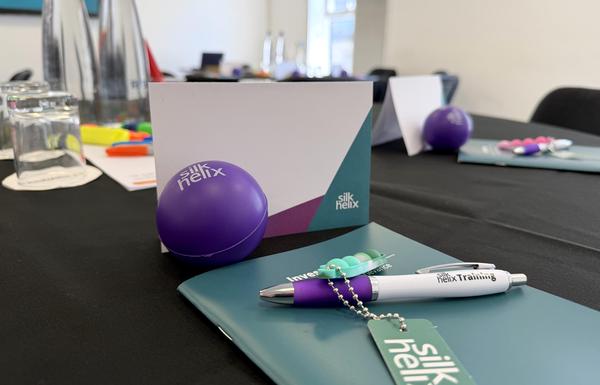
I recognise that to get discussion going you need an inviting environment. For in-person training this means a room set up, which includes a supply of fidgets and sweets, usually this in itself creates instant discussion as people enter the room. This sets people at ease and creates an ice breaker of its own.
You get a little hint of my style on our YouTube channel. In-person training is like that just with lots of interaction interspersed.
Trusted by Leading Organisations


Frequently Asked Questions
If anyone attending our training sessions has a specific need we should be accommodating we ask that you tell us in advance so that we can plan the training accordingly. We will do our best to accommodate any need for whatever reason that need exists.
There are also some common ways we develop our training to take into account the wide variety of learning styles and needs. We know learning styles are not limited to visual, auditory, reading and writing, and kinesthetic. Learning is impacted by a whole variety of things, including underlying medical conditions (diagnosed and not), comfort/ safety in your environment and your past experiences of learning. Our training by design takes this into account, including:
- a welcoming environment for learners to enter
- stress balls or other fidget resources
- workbooks with place for personal notes if the learner wishes
- minimal need to read long pieces of text
- noone is called out or picked on (even to go first)
- no icebreakers that require you to reveal personal information (we do use activities but always related to the learning and with a specific goal)
- no role plays (we find for too many people the issues around acting get in the way of learning)
- regular breaks
- no lengthy period of lectures by the trainer - it’s about discussion of your real life cases or activities that make you think or develop skills
- Yes, we’ve worked with many clients where we’ve delivered multiple courses to allow everyone to attend. We don’t recommend more people in the session for many of the reasons listed above, our courses are designed to be interactive and a safe place to discuss real life situations. Once the groups get much bigger than 14 it starts to become difficult for everyone to participate in these discussions.
- Yes, we’re happy to adapt and design sessions to suit your needs. Book a FREE, no obligation, consultation to discuss your needs and get a quote for bespoke training.
Yes, our in-person training is provided at your venue. Some clients use meeting rooms in their buildings, others book venues. There are a couple of things to consider - we need space in the room to move around. We won’t get you running about but being able to move into smaller groups for discussion, sometimes brainstorming around a large piece of paper are examples of the activities that need space.
In addition, our trainer will need parking as training comes with a lot of kit, plus somewhere to plug a laptop in and either a screen or projector. We don’t use loads of slides (Jenefer isn’t a fan or either producing them or remembering to switch slides) but there are a few occasions where a diagramme or video for example help make the point.
- Our full day sessions are 6 hours, including 30 minutes for lunch and 2 coffee breaks. Our half day sessions are 3 hours with a coffee break. Exact times may vary slightly, training courses are interactive with plenty of opportunities for discussion built into the day, this can impact the end timing slightly.
 Yes.
Yes.
We are a registered provider with The CPD Certification Service- Every session is delivered in person by Jenefer Livings, our founder. Chartered CIPD, a Postgraduate Certificate in Neurodiversity, a qualified Workplace Needs Assessor, 20 years in HR and neurodivergent herself. Training is never outsourced to an associate.
- If you’re ready to go ahead then either book a consultation or email training@silkhelix.co.uk with your requirements and we’ll get dates booked in.
- E-learning delivers information at scale but it can’t read the room, work through your managers’ real situations or answer the questions that come up in the moment. This is live, interactive training built around your workplace and delivered personally by a Chartered HR practitioner and neurodiversity specialist. Managers leave with tools they can use straight away rather than a completion certificate.
- That’s the whole point. The training is built around the real situations your managers face and sends them away with specific, practical tools rather than theory.
- Almost certainly. We have delivered this training across enterprise, public sector and SMEs, in software, insurance, manufacturing, engineering, care, publishing, the fire service and more. The session is built around your managers’ real cases, so it fits your sector by design.